


Bernhard Unger-Weber
Scrum Master, ryd
Spreo has created an obvious uptick in active participation, and shifted the tone of our retrospectives. Team members are now more proactive about suggesting improvements and celebrating wins openly.
Run engaging retrospectives and turn feedback into action. Reflect on what worked, surface honest input, and track improvements from one sprint to the next.
Made for Retrospectives
Retrospectives depend on honest input, active participation, and clear follow-through. Spreo gives teams a structured space to share feedback, group ideas, and turn discussions into actions, so retros lead to real improvements instead of repeated conversations.

Teams can choose from a wide range of retrospective formats, so sessions do not become repetitive over time.

Private writing allows everyone to contribute independently before ideas are shared, helping quieter team members speak up.

Retros follow a clear process while still allowing the team to organise and group ideas naturally on the board.

Actions created during the session are assigned, tracked, and brought into the next retrospective, so improvements are followed through.
Retrospectives are sessions where the team reflects on the last sprint or project phase to understand what went well, what did not, and what to improve. The goal is to surface honest feedback, identify key themes, and agree on a small number of specific actions for the next sprint.
These sessions are typically run with the full team and rely on open discussion and participation, with a focus on improving the team’s process over time.
Teams select a template such as Hot Air Balloon, Sailboat, Start/Stop/Continue, 4Ls, or Mad/Sad/Glad to structure the session, so there is always a format that fits the team's needs.
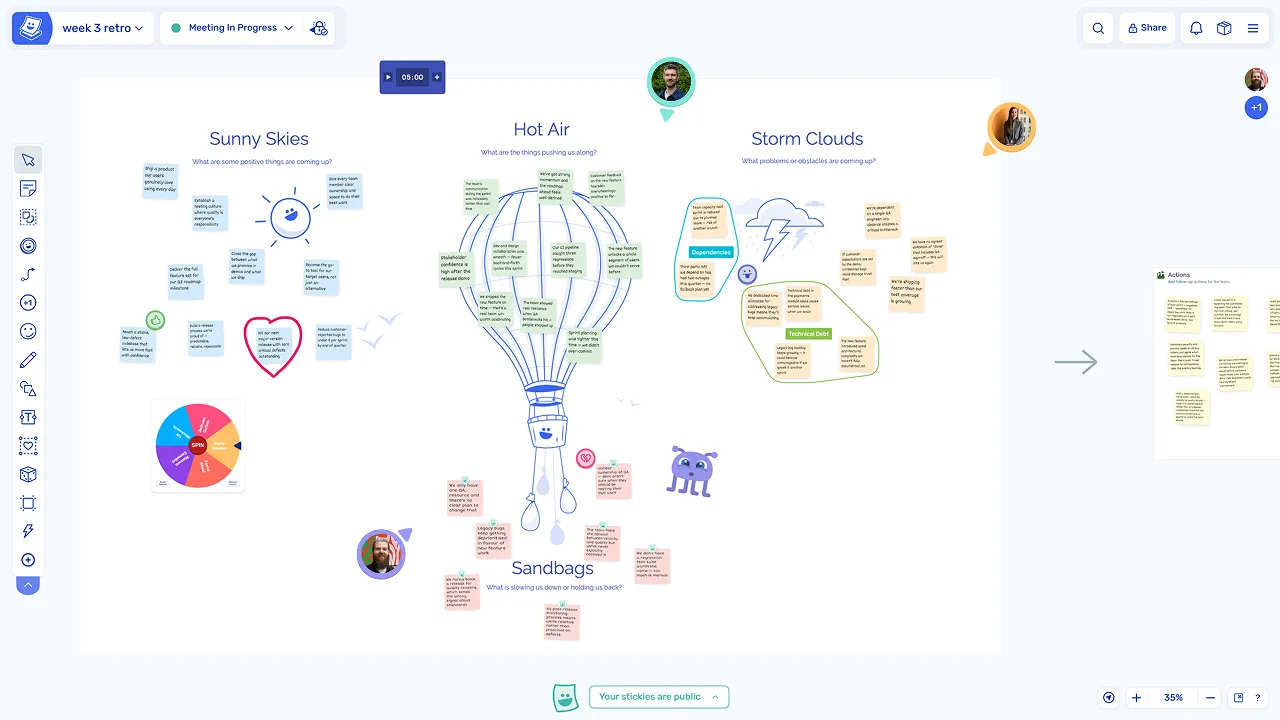
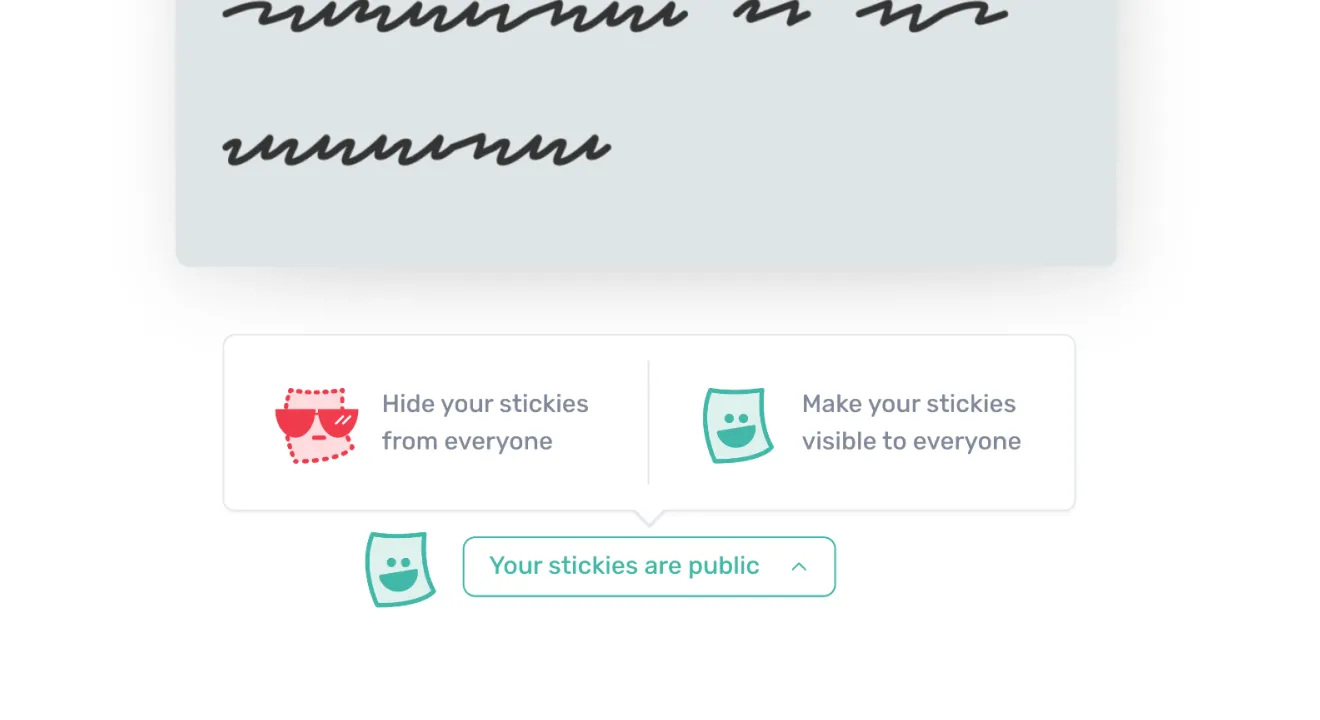
Participants add sticky notes in private, sharing what went well and what could be improved before revealing their input, encouraging honest and unbiased contributions from everyone.
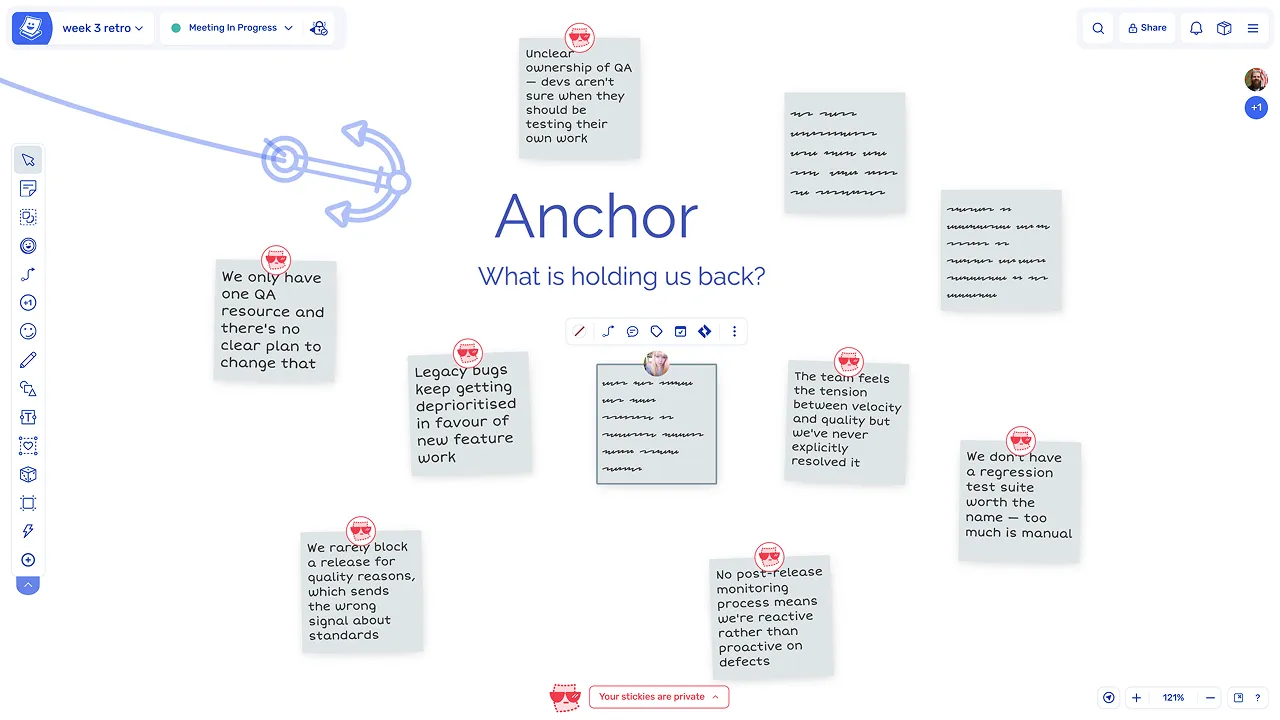
Once everyone is ready, stickies are revealed and the team reads through all feedback together, giving everyone visibility of each other's input before the discussion begins.
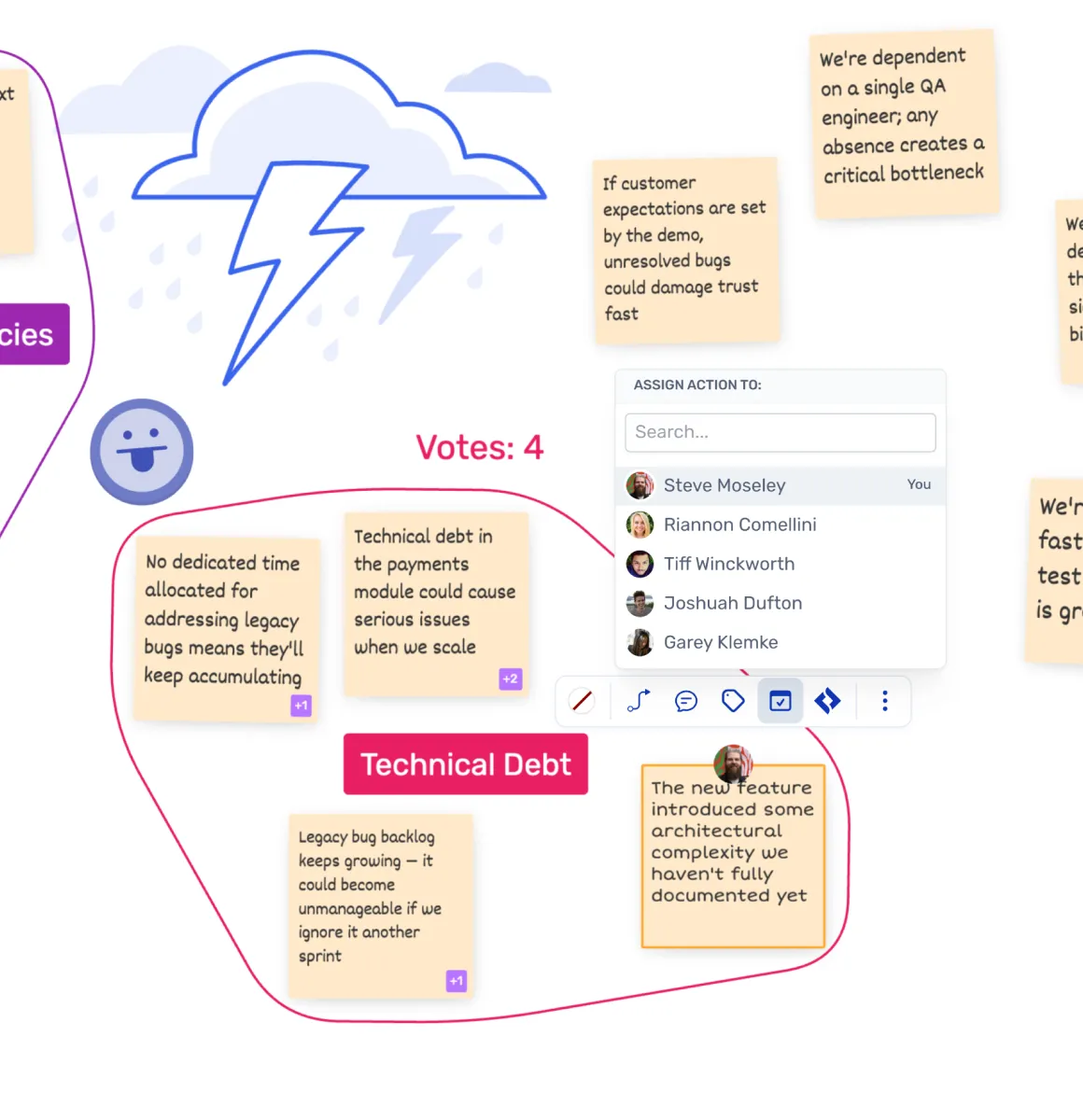
Similar stickies are grouped into topics to identify common themes across the team's input, making it easier to focus discussion on the most important areas.
The team votes on which topics to focus on, helping prioritise the most important areas to discuss and avoid spending time on lower-priority feedback.
Actions are created from the discussion, assigned to team members, and tracked with due dates, carrying forward into the next retrospective so nothing is forgotten.
Retrospectives are one of several agile meetings teams run regularly. Explore other agile sessions you can run in Spreo.
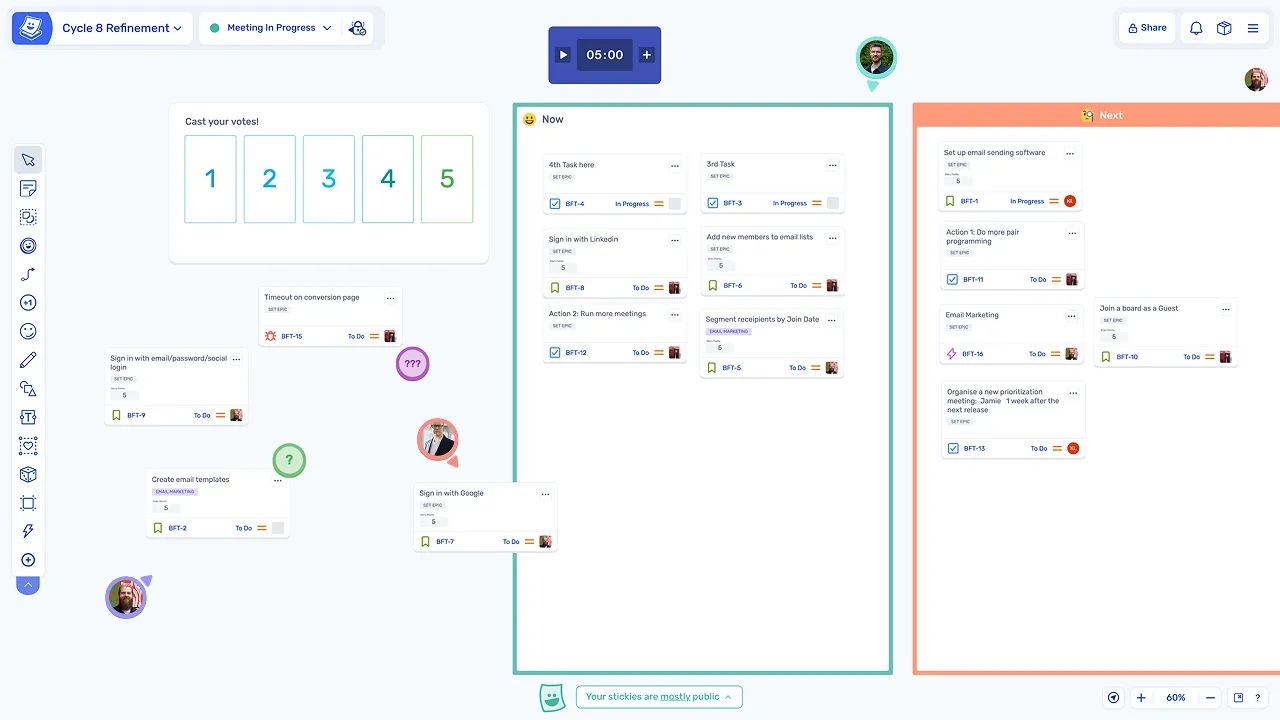
Plan your next sprint visually with drag-and-drop user stories and a shared board.
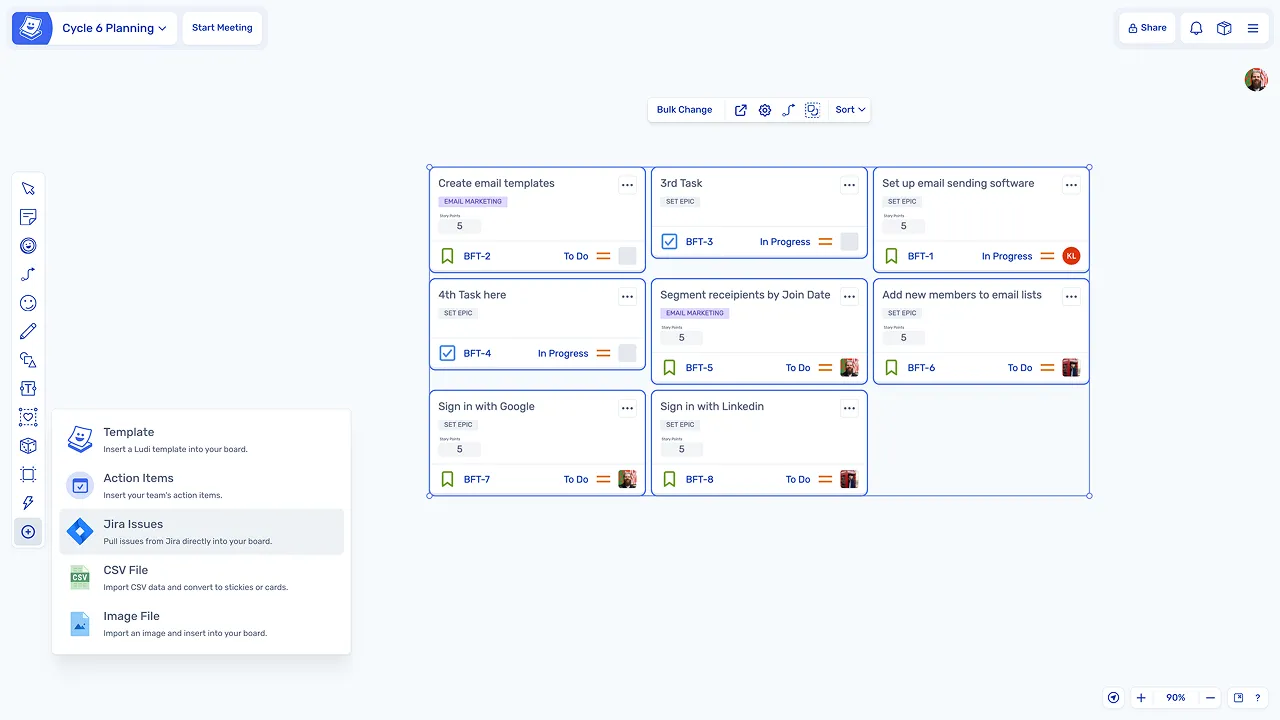
Review, prioritise, and clarify backlog items with the whole team in one place.
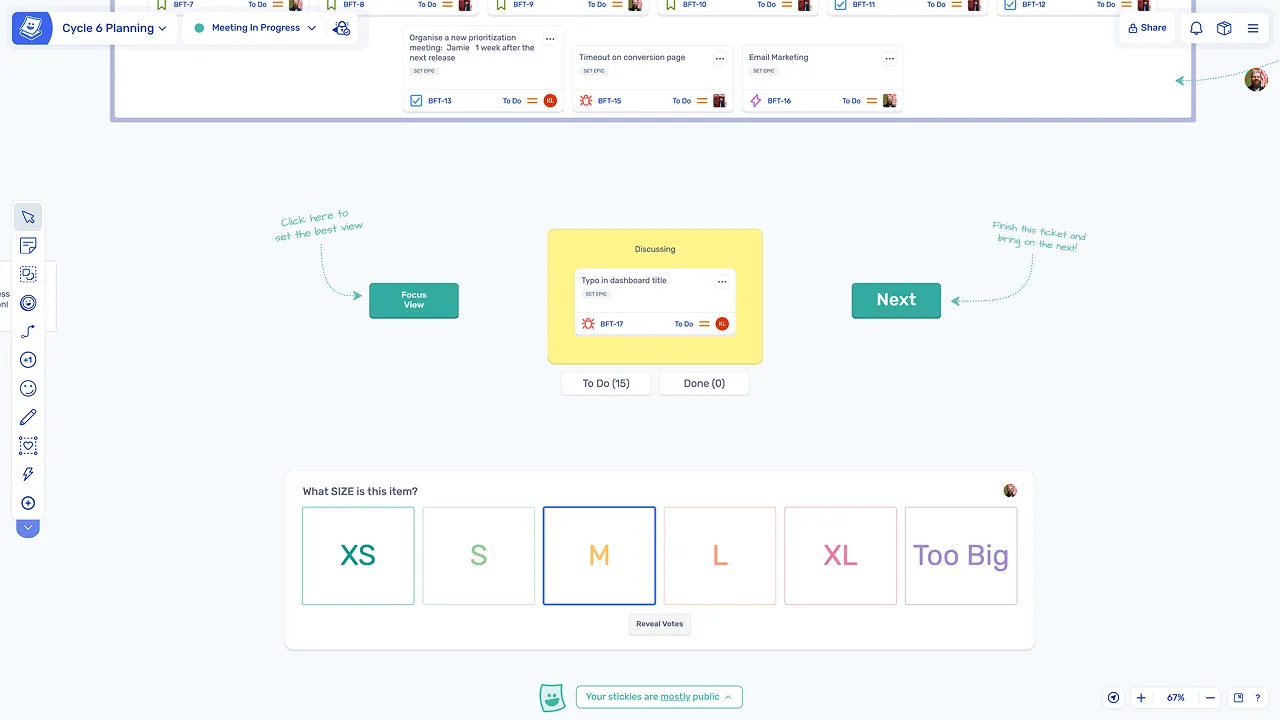
Estimate effort collaboratively with structured estimation activities and planning poker.
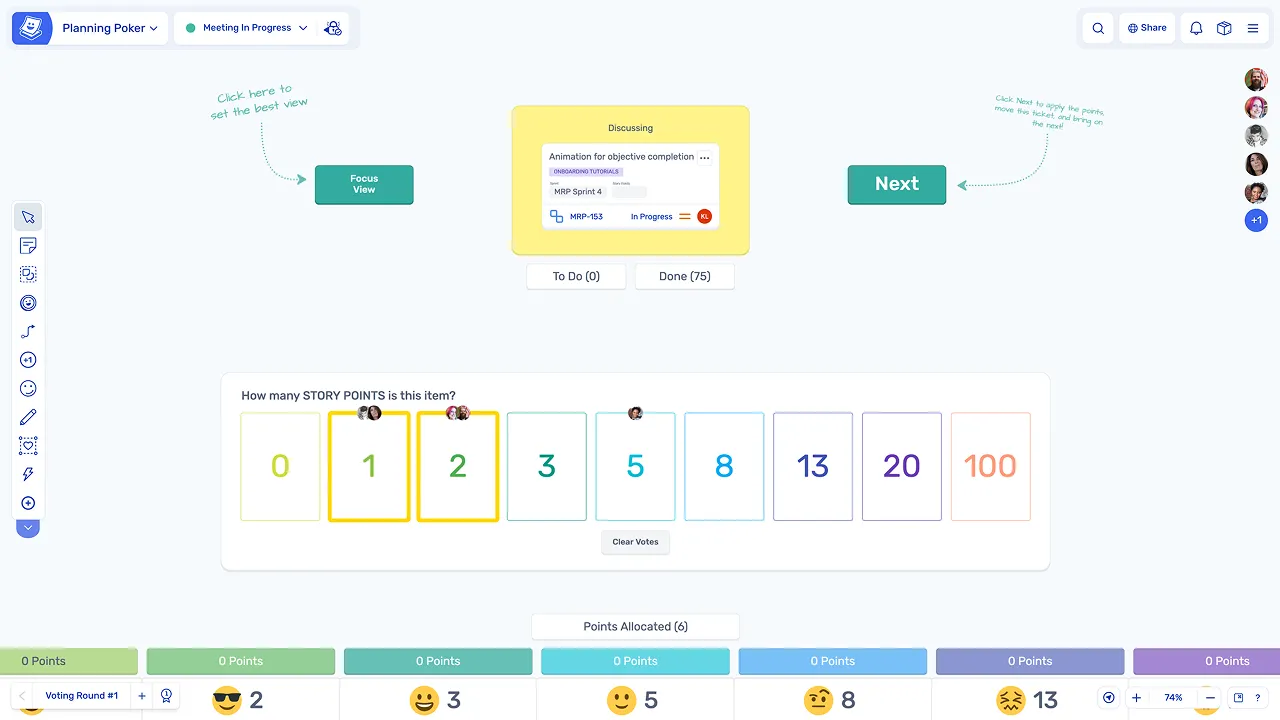
Run async-friendly poker estimation sessions to align the team on story complexity.
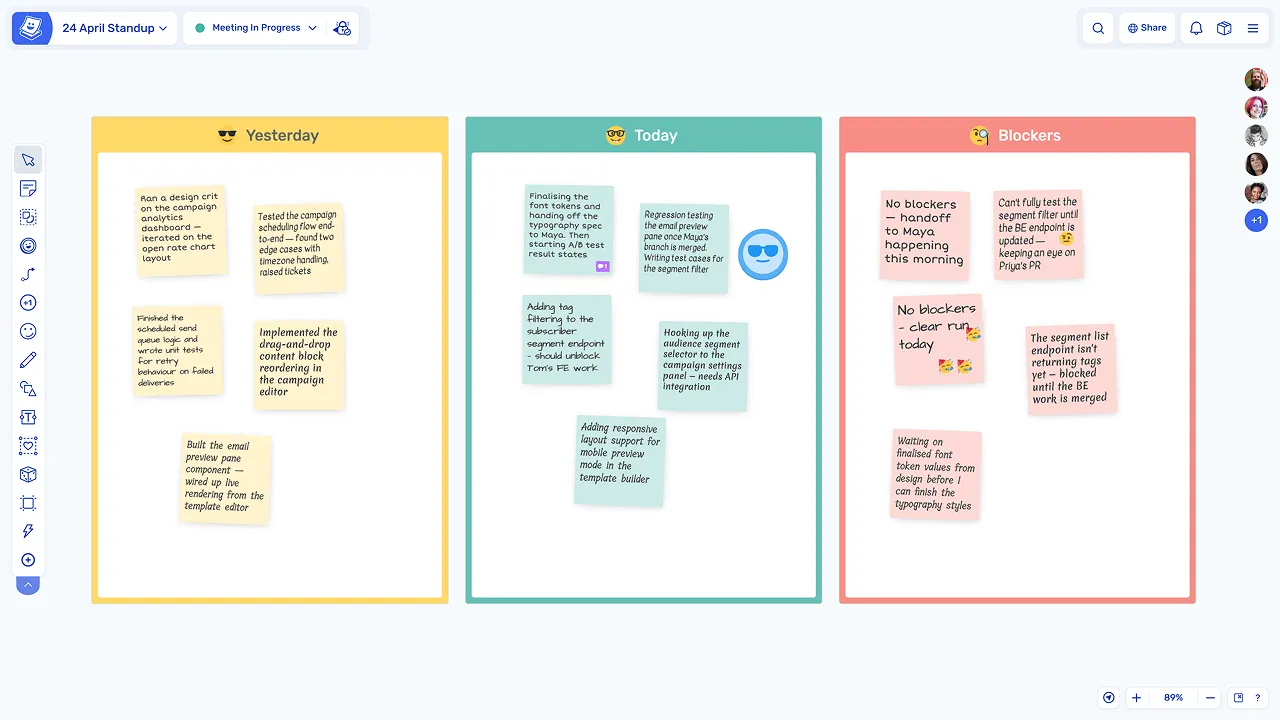
Keep standups focused and async-friendly with a shared status board.
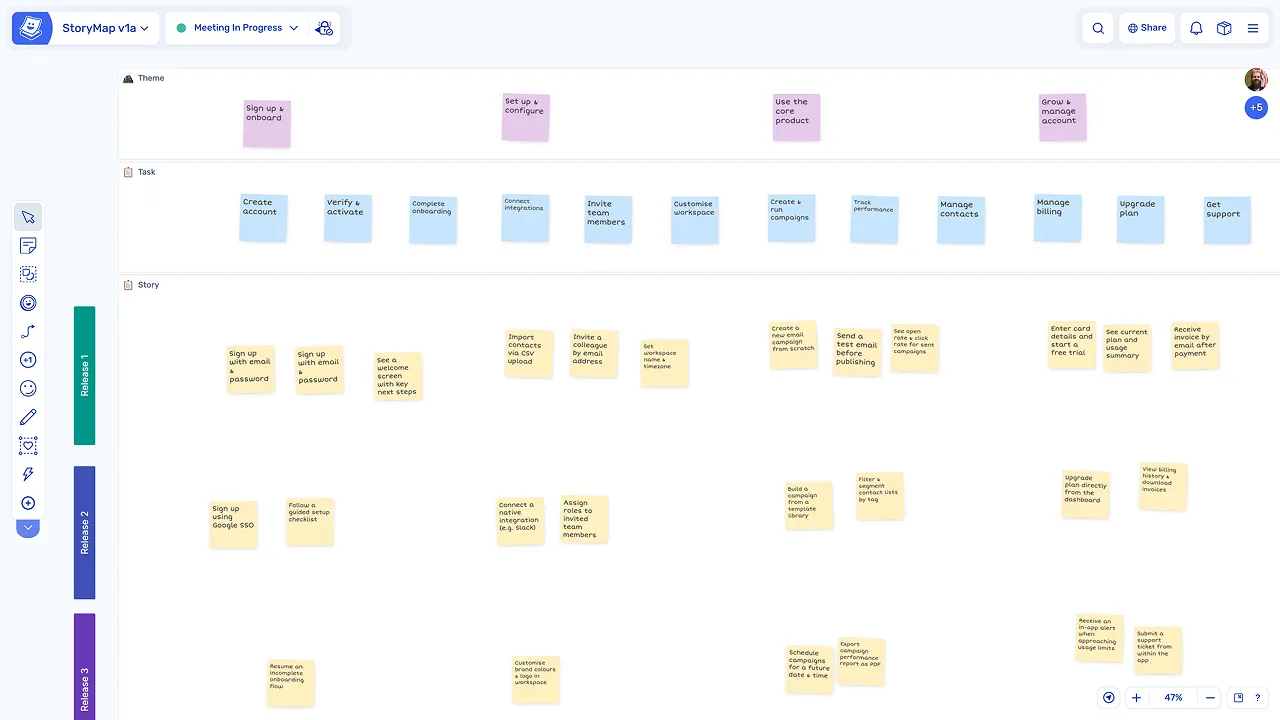
Map user journeys and plan releases visually with collaborative story mapping boards.
What the teams who use Spreo every week say about it
Bernhard Unger-Weber
Scrum Master, ryd
Spreo has created an obvious uptick in active participation, and shifted the tone of our retrospectives. Team members are now more proactive about suggesting improvements and celebrating wins openly.

Marteijn Mout
Senior Scrum Master, Jumbo Tech Campus
For my teams’ retrospectives I have been using Spreo for nearly 1 year and am very satisfied with this collaborative web app 👍
But now with their new upgrade to v2 it goes next level! So many new template options (eg ice breakers, Poker planning, T-shirt sizing, WoW). And also useful advanced facilitator controls within the boards plus optimized usability… big applause 👏

Chris VanderKolk
Engineering Manager, Zapier
Our team is focused on new product development, and rapid iteration is an important part of our process.
Spreo helps my team facilitate retrospectives to make sure we’re focused on what matters. Spreo’s wide selection of templates helps me adjust based on which problems we’re facing—there’s always a template for my use case.
Susan
Scrum Master, Oxford Club
I am a Scrum Master and have relied on Spreo for many things.
It first started out as a way to get the team to interact and be present in Retros but it has turned into a multi use platform for me. We use it for brainstorming, gathering our thoughts and ideas, Retros, etc. The ability to create your own “template” so to speak does wonders! In a time where we are mostly remote this has been a huge necessity & tool to keep the team engaged and bond as a team.
I’ve been told multiple times by team members that this is their favorite meeting, the Retros! I recommend and talk about Spreo as a great tool in my toolbox any chance I get.

Ana Skrbinsek
Scrum Master, eAsistent eŠola
We are using Spreo for our retrospectives and team games.
The teams I work with really love the features (especially the confetti one 😄).
I just had a retro with one of the teams yesterday and they noticed that they’re more connected and open and honest with each other which prevents conflict and gets issues solved sooner. It was a really nice thing to hear :)

Siobhan He
Product Manager, EZ Ops
We use Spreo for our retrospectives, but also for loads of other meetings. The team loves it! They are having a lot of fun with the planning poker and personalizing the retro boards.
The emoji stickies are a particularly big hit, as is the confetti tool.
We have used it a couple times for brainstorming and team building as well, and it worked really really well!
Spreo is completely free for 30 days, so why not sign up to try it out and do your part for collaboration!
Sign up for freeStill have a question? Contact us we’ll be happy to help you.
Ready to experience the best collaboration tool for your team?
Interested in Spreo for your organization? Book a demo.